Showing posts with label Liberty Park. Show all posts

12 January 2022

Shasta the Liger

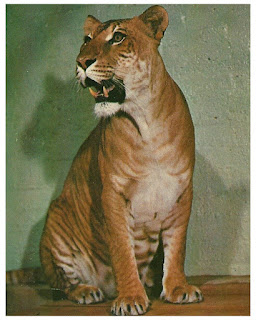
Postcard of Shasta the Liger at Hogle Zoo, 1950s.

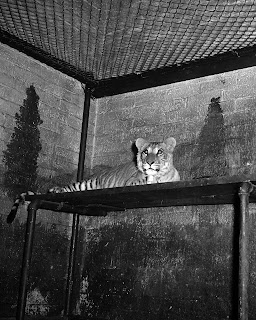
Shasta was the first liger born in the US and holds the world record for being the longest-lived liger ever known. She was born at Hogle Zoo on May 6 1948 to an African Lion father (named Huey) and a Bengal Tiger mother (named Daisy). If Shasta had been born to a lion mother and a tiger father, she would have been a Tigon, one of which was at the NYC Central Park Zoo at the time of Shasta’s birth.

At the time of Shasta’s birth, zoos operated akin to a circus in that animals were used to attract visitors and they paid little attention to conservation or animal ethics.

Thus, Hogle Zoo officials encouraged the mating of a lion and a tiger to produce a hybrid, one not normally found in nature. Shasta’s parents were introduced to each other by first placing their cages next to each other and then by allowing them to be in the same cage for the duration of the mating season and were relieved when one did not kill the other. Zoo employee Joe M Naylor, who was likely responsible for the mating, later boasted that only he knew the secret “love potion” to making hybrids.

When Shasta was born in 1948, she was ignored by her mother so Superintendent of City Parks and top boss of Hogle Zoo, Joseph Sloan, took Shasta home for his wife Bertha to care for. As the Superintendent, the Sloans were provided city housing- the historic Isaac Chase house which now serves as the Chase Home Museum of Utah Folk Arts within Liberty Park.

Bertha took on primary care of Shasta for the first few months of her life. Shasta was doted upon by Bertha and a running joke of zoo employees was that she was named after her temperament in that “she hasta have this, and she hasta have that.” In reality, Shasta was named by a contest held by the Salt Lake Telegram.

Shasta was bottle-fed with a custom mix of milk formula, lime water, vitamins, egg, and cod liver oil and was burped like a baby when she needed it. She played in the house and after a couple of months, she was allowed to play outside on the lawn of Liberty Park (Image 2-3). Shasta’s favorite toy was an old leather purse of Berthas which Shasta pounced, chewed, and wrestled with. As she grew Shasta was moved to the upper porch of the Chase house where she could roam a little more freely.

Baby Shasta on the lawn of Liberty Park, June 10 1948, “Liger Shasta - 17” From UDSH

Baby Shasta on the lawn of Liberty Park, August 1 1948, “Shasta the Liger - 5” From UDSH

Shasta’s first few months were also her most famous with photographs of her published in newspapers around the world. Life Magazine even did a 4-page spread on Shasta in Sept 1948 (Image 4).

The first page of the 4-page Life Magazine article on Shasta, Sept 20 1948.

Shasta moved back to Hogle Zoo when she was about 3 months old and for the duration of her 24-year life, she was the most popular animal at the zoo. She had birthday celebrations every year in which thousands of people would visit her (Images 5-6).

Shasta birthday party, May 9 1964 “Shasta Birthday Party at Zoo -Shot 10” From UDSH

Shasta birthday party, May 9 1964 “Shasta Birthday Party at Zoo -Shot 10” From UDSH

Most of Shasta’s life was spent in the now-demolished Old Lion House building where the small animal exhibit is currently located. This facility was little more than metal cages within a concrete building with dividers separating Shasta from the other big cat species (Images7-8).
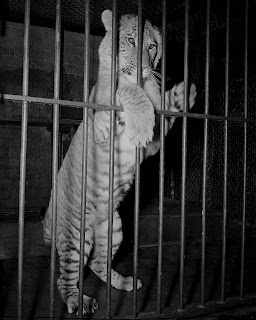
Sasta in her enclosure in the now-demolished old Lion House, March 1949 “Shasta the Liger - 19” From UDSH
Shasta in her enclosure in the now-demolished old Lion House, May 4 1949 “Shasta the Liger - 23” From UDSH

In 1970 the new Feline Building was completed (now remodeled into the Cat Wok Café) and Shasta and the other big cats were moved into the larger facilities. Shasta had never seen a lion or a tiger in her entire life and she cowered in the corner of her new enclosure for several days.

Shasta died in 1972 at the age of 24 years. Since Shasta was so loved and a major attraction, zoo officials decided to have her stuffed and return to the zoo for exhibit. In 1997 Shasta was moved to the Monte L Bean Life Science Museum at BYU because hybrids in zoo setting had become controversial.

You can still visit Shasta at BYU (Image 8).
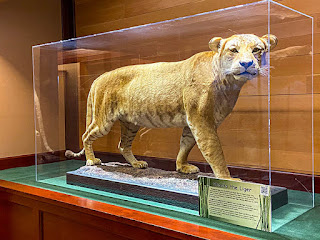
Shasta at the Monte L Bean Museum, 2022

Sources:
Salt Lake Telegram 1948-05-06
Salt Lake Telegram 1948-07-28
Life Magazine 1948-09-20
Deseret News 1970-03-18
Deseret News 1970-05-07
Deseret News 1972-07-19
Davis County Clipper 1972-08-04
Salt Lake Tribune 1977-12-25
Salt Lake Tribune 2016-06-20

23 October 2021

The Witch's House in City Creek Canyon... Is Really the Empire Mill

SLC urban legends tell of the “Witch’s Cabin” (or house or hut) located in City Creek Natural Area above Memory Grove Park (about where 11th Ave would cross City Creek).

Foundation of the Sudbury House (and later Bandstand),
part of the Empire Mill complex, Oct 2021.
 
The tales vary but usually include disembodied lights and voices. Sometimes it is a bad witch, sometimes a good witch, and sometimes the witch turns into a tree. Often the stories get muddled with other tales of Memory Grove.

The actual history is that this stone foundation is the remnants of the Empire Grist Mill complex, specifically the house of Samuel J. Sudbury, the miller employed by Brigham Young.

The Empire Mill was constructed in 1862 by mill architect Frederick Kesler for Brigham Young. Kesler also designed the Chase Mill which was similar in design. Samuel J. Sudbury operated the mill for 17 years for Brigham Young.

The mill’s primary business was to convert tithing wheat (10% of a Mormon farmer’s grain harvest) into flour which was then sold at the Tithing Store on South Temple and Main Street.

The mill was 3 stories tall with a stone foundation and wood frame superstructure. A massive 30 ft diameter waterwheel powered the machinery which produced 100 sacks of flour a day with its 2 pairs of French Burr grinding stones. The adjacent house was occupied by the Sudbury family and had a large garden and orchard.

On May 22, 1883, the mill burned to the ground destroying the mill and $8K of wheat and flour (~$217K today). The equipment that could be salvaged, including the millstones, were relocated to the Chase Mill, which is now in Liberty Park.

In 1902 Salt Lake City purchased the upper part of City Creek Canyon from the family of Brigham Young, which included the ruins of the Empire Mill and Sudbury House. In 1913, the SLC chain gang demolished the remaining walls of the mill complex.

In 1914 the SLC Parks Department built a new bandstand on the foundation of the old house as part of the grand opening of the new City Creek Boulevard (now North Canyon Road) and the construction of a footpath up the canyon (now the Freedom Trail).

The building of the bandstand explains the current configuration of the ruins: the concrete capped walls and stairs, the stone pillars along the walls, steel posts within the pillars, and entrances on all 4 sides of the foundation.

Throughout the 1920s the ruins of the old mill, by then mostly known as Sudbury’s Mill or Sudbury’s Flat, was a popular spot for picnics.

From what I could determine, by the 1970s memory of the old Empire Mill and house had been mostly forgotten and the urban legends of hauntings became more prevalent.

In fact, in a Facebook post on Utah’s Haunted History, Meretta England says that in 1976 she and her friends haunted Memory Grove as a prank and are responsible for the Ghost Bride stories.

NOTE 1:
If you are interested in the paranormal aspect of this area I found that The Ghost Box podcast Episode 2 “Memory Grove Never Forgets” was a good balance between the skeptic and the believer. 

NOTE 2:
The ruins of the old Empire Mill are located on land owned and administered by Salt Lake City and is within the City Creek National Historic District and the local City Creek Local Historic District. This means that the Salt Lake City government (and the SLC Historic Landmarks Commission) is responsible for the oversight, preservation, and interpretation of this site.


Sources:
Deseret News 1883-05-23; Salt Lake Tribune 1891-07-19; Salt Lake Herald 1913-07-27; Deseret News 1914-04-29; Salt Lake Tribune 1920-04-30; Salt Lake Tribune 1921-06-12; Salt Lake Tribune 1925-05-10; UDSH Liberty Park site file; SLC Plat D; Utah’s Haunted History Memory Grove thread 2020-05-17.

Foundation of the Sudbury House (and later Bandstand),
part of the Empire Mill complex, Oct 2021.

Foundation of the Sudbury House (and later Bandstand),
part of the Empire Mill complex, Oct 2021.

Detail of foundation walls. Note the concrete cap and steel pipe post. 

Composite image of Empire Mill photograph and SLC Plat D Map, both from UDSH

Colorized photo of Empire Mill with labeled notes.
Composite image of Empire Mill plans, from UDSH.

14 April 2021

Marble Tournaments

Clipping from SL Trib 1929-04-21


Marble tournaments for kids used to be a big thing in SLC.

The Salt Lake Telegram sponsored the first formalized SLC citywide marble tournament in April 1923.

Tournaments were held in city parks and schoolyards during school’s Spring Break with trophies offered to the winners.

The official rules did not indicate the game was to only be played by boys, but that was generally who entered. I saw a few instances of girls playing in national tournaments but none in the local SLC games (girls may have played in SLC and it just was not reported in the newspapers).

By the early 1930s SLC had taken over sponsorship of the marble tournaments and thousands of children entered the contest each year. Semi-finalists who won at each regional city park or schoolyard advanced to the finals, which were generally played at Liberty Park.

By 1935 the marble tournament (for boys) was combined with the hopscotch tournament (for girls) and competitions were jointly held.

After WWII the Veterans of Foreign Wars (VFW) became a co-sponsor and helped with judging the competition.

The marble tournaments continued through the late 1960s by which time Salt Lake County Recreation had taken over sponsorship.

Marble tournaments declined in SLC during the 1970s.

Although marble tournaments still occur, they are no longer a SLC sponsored event.

SL Telegram 1931-04-01

SL Trib 1932-03-26

SL Trib 1933-04-09

SL Trib 1938-04-08

SL Trib 1942-04-12

SL Trib 1946-03-30

SL Trib 1948-06-04

SL Trib 1951-04-11

SL Trib 1963-05-05

05 April 2021

Princess Alice, the Elephant

Alice in her pen at Liberty Park Zoo, from @utahhistory_collections

Princess Alice (1884-1953) was a wild born Asian elephant that was purchased in 1916 by SLC’s children from the Sells Floto Circus to be part of the zoo in Liberty Park, which was established in 1908.

The idea was born from the SL Telegram which suggested donations could be gathered to purchase an elephant from a circus, one of which had just come through SLC. At the time the most exotic animals at the small zoo in Liberty Park were monkeys.

The first contribution was from 14-year-old Esther Leib who lived in the Avenues. In all, $3,250 was received, the majority were small contributions from SLC children but several large contributions helped immensely, especially the final contribution from P J Moran (builder of the Big Cottonwood Aqueduct).

Princess Alice finished her final show in the Sells Floto Circus on Aug 27 1916 and she walked from the circus grounds at 800 S and Main St to her new home at Liberty Park. Her longtime caretaker from the circus, Emil “Dutch” Shider, joined her in SLC and continued to care for her at the zoo.

Even though her enclosure was rather small in the zoo, Alice got out for exercise quite often- sometimes planned visits to SLC schools and sometimes she escaped and wandered the streets of SLC. In the early days she was also put to work hauling heavy items in Liberty Park, plowing the Park for planting, dragging a road grater, among other tasks.

It was Alice’s frequent escapes that prompted the move of the zoo in 1931 from Liberty Park to its current location on land donated by the Hogle family.  

The construction of the new zoo was welcome news, not only for the better facilities for the animals but the construction jobs it provided during the Great Depression. Promises were made to limit the use of machines to construct the zoo so that more laborers could be employed, and wages would be paid daily to ensure food for families of workers.

Alice remained at Hogle Zoo for the rest of her life. She was euthanized March 30 1953 by placing an opiate in her drinking water. At the time she was thought to be 69 years old.

Her carcass was trucked to the Utah Animal By-Products Co plant in West Ogden in which she was turned into poultry feed and soap products.

The Deseret News published an editorial stating that “surely a princess, even an old, old one, deserves a better final fate than a truck ride to the soap factory.”

Of Note: Princess Alice was pregnant when she arrived in SLC and gave birth to Prince Utah.

Sources: SL Telegram 1916-08-27; SL Telegram 1916-09-25; SL Trib 1931-08-30; Des News 1953-03-31; Ogden Standard Examiner 1953-03-31

Alice performing circus tricks at Liberty Park, SL Trib 1928-07-13

Alice getting a manicure, SL Trib 1929-05-13

One of several attempts to transport Alice from Liberty Park to Hogle Zoo, SL Trib 1931-11-25

Alice and her longtime keeper Dutch Shider, SL Trib 1932-08-17

Alice performing circus tricks at Hogle Zoo 1940, from UDSH. 

Alice’s birthday party 1941 at Hogle Zoo, from UDSH


Prince Utah, the Elephant

Postcard of Prince Utah nursing from Princess Alice, at the Zoo in Liberty Park, 1918. From UDSH.

Princess Alice, the Asian elephant, was pregnant when she arrived in SLC in Aug 1916.

During her time with the Sells Flotos Circus, Alice had given birth to 3 elephant calves.  At the time, Alice was the only elephant in America to birth to a living calf (other elephant calves had been born in captivity in Denmark). Unfortunately, none of her offspring survived.

Baby Hutch was born in June 1912 and died of starvation when Alice refused to nurse him and the caretakers were ignorant of how to care for a baby elephant. Baby Tambon was born April 1914 and was also rejected by his mother but was fed incorrectly by his caretakers and died. Little Miracle was born in April 1916 and died a few moths later after catching an infection in Wallace, Idaho. 

On April 29 1918, 20 months after arriving at Liberty Park, Princess Alice gave birth to Prince Utah. Just like his mother, Prince Utah also escaped his Liberty Park enclosure, which greatly upset Alice and she trumpeted and caused general mayhem until he was quickly returned to her.

Prince Utah lived nearly 11 months and died on March 14 1919. Most modern sources state that the cause of death was his mother accidently rolling over on him, yet newspaper articles from the time indicate an autopsy was conducted and found that the baby elephant died of clogged arteries from a fibrous growth in his heart.

That wasn’t the end for Prince Utah. The baby elephant was stuffed by SLC taxidermist Harry Leff and placed on display at the zoo in Liberty Park, the LDS Church Museum, and Hogle Zoo. 

Prince Utah eventually went missing and the mystery was solved by the Deseret News in 1962.  Apparently, souvenir hunters had taken pieces of Prince Utah over the years and he was not fit for public display and removed from the Lion House at Hogle Zoo.  Prince Utah then ended up at Turpin Meadows Ranch in Jackson Hole, WY.  According to ranch owner, John Turner, he had delivered 2 bison to Hogle Zoo and was gifted Prince Utah by Mr. Hogle.  At the Wyoming Ranch, Prince Utah was outfitted with elk antlers and became a tourist attraction until he was eventually discarded.

Sources: Elephant Database (elephant.se); SL Herald Republican 1917-10-14, SL Telegram 1919-03-15; SL Herald Republican 1918-08-05; SL Herald Republican 1919-07-04; SL Telegram 1942-03-24; Des News 1962-11-22

Princess Alice and Prince Utah at Liberty Park zoo, 1918. From UDSH.

Announcement of baby elephant, SL Herald Republican Oct 14 1917

17 October 2020

Spooky SLC: Unsolved Murder of Frances Korous, part 2

Liberty Park 1912 with the bridge where it was surmised that
Frae’s body was dumped into the lake. From UDSH
. Color by Imagecolorizer.

Continued from previous post

20 days later, on the afternoon of Nov 6 1920, 13 year old Truman Pratt was sailing a toy boat in the southeast section of the Lake at Liberty Park when he saw what he thought was a Halloween mask floating in the water about 15 feet from shore.

He fashioned a hook to the string of his boat and tried to drag the item back to shore, only to discover it was the body of Frae Korous. He immediately found Park Superintendent Sidney R Lambourne who was in the greenhouse who then called the SLC Police.

At the Coronor’s Inquest, it was discovered that there was no water in Frae’s lungs which ruled out suicide. Death was caused by strangulation by a piece of cloth tightly knotted around her neck; the cloth came from a woman’s undergarment (but not from Frae’s undergarment). Her shoes were partially untied. Her jewelry was still attached to her clothing ruling out robbery. And there were no bruises or other injuries on her body. Her stomach was found to be empty with the exception of a red liquid, likely from some cheap candy. No sign of poison was found in her stomach. And rigor mortis had set in with her body being in a sitting position indicating she was killed in a chair.

A spot of blood was found on the bridge at Liberty Park and some thought that may indicate where her body was dumped. It appeared that her body had been in the lake for up to 2 weeks (although rigor mortis, so maybe not).

In the 1920s that was the extent of the forensic evaluation and the SLC Police were stumped. No motive could be determined and no suspects were found. Although the empty stomach pointed to her being alive for a time after her last meal, some of the Police thought it indicated that her brother Yaro lied about the last day she was seen alive and he was arrested and held for several days. Eventually he was released as there was no evidence to hold him.

The murder of Frances "Frae" Korous was never solved.

Sources: Numerous historic news articles but especially SL Trib 1920-11-07.

Weird note: Truman Pratt later drowned in Utah Lake at the age of 38 while duck hunting.

10 September 2020

Previous Windstorms with Massive Damage in Salt Lake

June 4 1949
The wind damage in recent days inspired me to investigate past windstorms in Salt Lake City. Here are a selection of wind damage photos in SLC. Dates and locations are stated when known. All images from the Utah Division of State History.

April 7 1956
April 6 1949
March 26 1938
April 7 1956
March 26 1938
June 4 1949
June 3 1963 in Rose Park
Unknown date
Unknown date, Liberty Park

06 April 2020

Daughters of the American Revolution Fountain now in Liberty Park

 Fountain as it is today in Liberty Park
This 115-year-old drinking fountain has a history of dysfunction.

Originally it was located in front of the Salt Lake City Public Library (now O. C. Tanner building at 15 S State St). It was donated to Salt Lake City by the SLC chapter of the Daughters of the American Revolution (DAR).

The fountain was designed by the son of a local DAR member who was an art student at Princeton. It was then made in Vermont at a cost of $650 (about $19K in 2020 dollars). It is made of Gray Vermont Granite with the emblems of the DAR on two sides. On the other two sides read: “Erected by the Spirit of Liberty Chapter, D. A. R.” and “D. A. R., designed by W. M. Allen.” Cups were supplied to dip into the water trough and a separate drinking trough for dogs is at the base.

It was dedicated on Nov 18 1905 with much ceremony and the Fort Douglas regimental band provided music.

Unfortunately, things went downhill from there. Shortly after the fountain had been installed one of the pipes burst and the fountain sat idle for months because of a dispute between the plumber and the City.

In June 1908 the City determined that the plumbing design was defective and the water bowl of insufficient depth. The DAR intended to repair the fountain but enough funds were never raised.

By July 1910 the fountain still had not been fixed and the SLC Committee on Sanitation recommended that the fountain be shut off permanently.

In Nov 1921 the fountain had fallen into further disrepair and the City Commission decided to move it to Liberty Park. Plans were made to reconstruct it and to make it a bird and dog fountain but, true to its past, enough funds were never raised and it was never repaired.

Today it remains a civic ornament and is on display in a flower bed at Liberty Park.

Sources: DAR Magazine V28 and various historic newspaper articles.

 Fountain as it is today in Liberty Park
 Fountain as it is today in Liberty Park
 Fountain as it is today in Liberty Park

Fountain as it appeared just after installation in 1905, from UDSH.

Fountain as it appeared just after installation in 1905. From DAR Magazine V28 3


Update April 5 2021: 
The Utah State Society of the Daughters of the American Revolution have a blog post about this fountain.