Showing posts with label Medical. Show all posts

30 December 2025

Valley Tan Knocks out Tom Longcoffin

A fun illustration from 1884 advertising Valley Tan Remedies. Tom Longcoffin, appropriately illustrated as a pinch-toe coffin, surrenders to the Valley Tan Remedies patent medicine. 

The Valley Tan reference has quite a history. Early historian Edward Tullidge explained the term was first used regarding locally tanned leather (vs imported leather from outside the Utah Territory) which was of poor quality due to expedited processes.

The term became a derogatory expression to any rough homemade item, including whiskey. It gradually began to be applied more broadly to any item made within Utah, and by the 1860s was used as a "buy local" campaign to support local businesses.

This advertisement stems from the Johnson family patent medicine business. Originally began by LDS Pioneer Joseph Ellis Johnson Sr, who had a longstanding curiosity about botany, among other interests.

By the 1860s, Joseph was advertising his remedies in the Deseret News and sharing his recipes and discussing horticulture in his own newspaper, The Farmer's Oracle.

As Joseph aged, his eldest child from his 3rd plural wife, Charles “Charlie” Ellis Johnson, took over the medicinal family business using his father’s recipes.

In the early to mid-1880s, Charlie worked in the ZCMI Drug Department where he stocked many of the Johnson elixirs, including “Johnson’s Essence of Life” advertised to promptly save the lives of your children. And the “Valley Tan Canker Syrup” and “V-T Worm Lozenges” (to treat intestinal worms).

In 1888, Charlie partnered with Parley P. Pratt Jr, also from the ZCMI Drug Department, to form the Johnson-Pratt Drug Co located at 48 S Main St SLC. Charlie continued to manufacture the Johnson family medicines under the name Valley Tan Remedies (VTR) Laboratory.

Charlie was also interested in photography, and while still engaged in the drug business, partnered with Hyrum Sainsbury to open a photo studio.

For a time, the VTC Laboratory and his photo studio/printing/supply business were all in the same building at 54 S West Temple (now roughly the location of Utah Museum of Contemporary Art).

Around 1895, Hyrum retired and Charlie incorporated his photography business, as Johnson Co., while still president of the Johnson-Pratt Drug Co. Charlie took many of the iconic photographs of SLC


23 March 2025

Dr. Nell C. Brown, Hair Physician

In 1902, 30-year-old Nell Young Clauson Brown reinvented herself as “Dr. Nell C. Brown: Hair Physician.”

Advertisement from the Salt Lake Theatre program, 1903. From USHS.

Her husband, Leigh, died a couple years previous, leaving her a widow with 2 children. Leigh had been in ill health for years, and for a time, the family lived in San Francisco and then Idaho Falls before returning to SLC where Leigh died.

Nell was not a destitute or desperate widow. She was a granddaughter of Brigham Young and a daughter of well-connected Hiram B. Clawson (through his 4th wife, Emily Augusta Young). She had affluent family she could entrust the care of her children while she completed coursework in San Francisco.

Perhaps it was while the family lived in San Francisco that Nell met Dr. Edith E. McClean, or perhaps Nell responded to one of the many advertisements recruiting women to take a 3-month course in “alopecia and dermatology using the Dr. W.S. Gottheil method.”

Edith was a character herself. Also reinventing herself after a divorce, she built up a hair restoration business in San Francisco and rebranded herself as Dr. E. E. McClean offering specialized hair and scalp services and a bottled Medicated Hair Tonic of her own concoction.

Dr. Edith E. Corey McClean, of San Francisco.

Nell studied under Dr. Edith and returned to Salt Lake in May 1902 and began her own business to “scientifically treat the hair and scalp” with special attention given to baldness, promising the majority of such cases were curable under the proper treatment.

She also offered manicuring and shampooing. Like Dr. Edith, Nell rebranded herself as Dr. Nell C. Brown. Her offices were in the ornate Templeton Building at 1 S Main St (now Zions Bank Building).

Various clippings advertising Dr. Nell C. Brown

The Templeton Building where Dr. Nell C. Brown had her offices.

In Jan 1904, Nell married John Aski Silver, of the famous Silver Brothers Iron and Foundry Works, and her hair career ended.

However, two of her associates began their own business: Miss Charlotte Lynberg and Miss Carrie Leaker relocated to the Constitution Building.

Nell was widowed again in 1916 and married Morris D. Rosenbaum in 1918. When Nell died in 1937 she had amassed an enormous extended and blended family.

27 December 2024

An Antique Electro-Static Machine

An example of an Electro Static Machine. Insert in lower right corner is the Karrick Building.

An antique electro-static machine was found on the 2nd floor of the Karrick Block at 236 S Main SLC during its renovation in 2000.

The device was made by the Frank S. Betz Co., a well-known supplier of a variety of medical supplies and equipment.  These electro-static devices were in use from about the 1880s through the 1930s.

The Electro Static Machine found in the Karrick Building

When this particular machine was found by MHTN Architects, they contacted The Museum of Questionable Medical Devices (www.museumofquackery.com) in Minneapolis and David G. Rickert identified the machine as a Holtz, of which there were many varieties and were popular between 1890-1910.

Within the wood cabinet were large circular copper plates that would revolve and create static electricity.  According to historic advertisements and instructions, this electricity could be used to cure a multitude of ailments.

An example of an advertisement for a Holtz type machine.

Excerpt from medial book indicating how to use the machine

Prior to 1905, when Lewis Karrick died, the main occupant of the Karrick building was Roberts and Nelden Drugs, a large wholesale and retail pharmacy.  

Lewis Karrick operated a gambling and billiards hall on the second floor and a brothel with 8 rooms on the third.  A description from the late 1970s notes that the names of several women still remained on the doors (I did not find any further information about these names).

In 1908 the building was acquired by Mary Judge (of the Judge Building) and the ground floor leased to longtime occupant Leyson-Pearsall Jewelers.

It is unclear who owned this abandoned electro-static machine. The upper floors of the Karrick Block were leased to many people, including some doctors and dentists. 

Comments on my Instagram post indicate this machine is within the collections of the Utah Historical Society. 

Sources:

  • Deseret News 2000-04-04
  • USHS file Karrack Building
  • Manual of Static Electricity in X-Ray and Therapeutic Uses by S.H. Monell M.D., 1900

31 October 2024

The Skeleton in Grandpa's Barn


In 1923, a few schoolgirls found a box of human bones in the barn of the Lund family at 127 W. North Temple, Salt Lake City. The box of bones was an open secret known by many of the kids in the neighborhood.

Herbert Z. Lund Jr. recounts the story of these skeletal remains in a Utah Historical Quarterly article titled “The Skeleton in Grandpa’s Barn” (UHQ V35 N1 in 1967).

Herbert Jr. states that his father, Dr. Herbert Z. Lund Sr., was a physician at the Utah State Penitentiary (at what is now Sugar House Park) and acquired the body of J. J. Morris. Morris was executed in 1912 by hanging for murder; and, in accordance with common practice his body was donated for medical purposes.

Dr. Lund intended the body to become a teaching skeletal specimen. After the anatomical dissection was completed, Dr. Lund reduced the body to a skeleton. Part of the process to create a skeletal specimen is maceration so Dr. Lund and his friend William Willis (a druggist by profession) took the remains to an open area near Beck’s Hot Springs and boiled the remains in sulfur water and lime. The final process of bleaching the bones was never completed and the bones retained a rancid odor.

Dr. Lund placed the bones in a wooden box and stored them in the unused hayloft of his father’s barn, Anthon H. Lund’s house at 127 W. North Temple (now demolished).

Dr. Lund’s children (Anthon’s grandchildren) were aware of the skeletal remains and often found ways around the locked entry to view the bones. Even the grandchildren of the adjacent neighbor, LDS apostle Matthias F. Cowley, knew of the bones. So it is not surprising that other kids got into the barn to sneak a peak at the bones of a convicted murderer.

Around 1925, Dr. Lund’s mother, Sarah, demanded that the bones be buried to keep curious people away. Dr. Lund’s son, Herbert Jr, buried the remains behind the old barn. He and his grandmother Sarah had a little graveside service where Sarah read excerpts from the LDS publication “The Improvement Era” and placed the old magazines in the grave with the skeletal remains.

The gravesite was dug behind the barn. Sanborn maps show that this barn was demolished around 1950-1951. In the 1967 article, Herbert Jr. stated that the area of the grave was still open land but that development was happening all around.

Herbert Jr. drew a map of where he believed the gravesite to be. This location is now in an expanded parking lot of the old Travelodge Motel at 144 W. North Temple. It is unknown if construction has impacted the grave or if it is still intact below the asphalt parking lot.


One complication of this story is that there is a burial record for J.J. Morris in the Salt Lake City Cemetery, which contradicts the identity of the skeletal remains as being J.J. Morris. 

However, both the Lund family history and several 1920s newspaper articles (including an interview with Dr. Lund, himself) indicate that the skeleton in Grandpa’s barn is J.J. Morris.

The burial record for J.J. Morris indicates that he is buried along with 14 other prisoners whose remains were originally interred at the old Utah State Penitentiary, which is now Sugar House Park. These remains were disinterred from the Sugar House location in 1957 when the park was built. The remains were reinterred in a small prison cemetery at the Point of the Mountain Prison in Draper. In 1987, the remains were disinterred again and reinterred at the Salt Lake City Cemetery- with several remains (identified as cremains) interred in a single grave.

So if the cemetery record is to be believed (and with all those disinterment’s it is possible that records may have been compromised) then the remains buried behind the Grandpa’s barn are not those of J.J. Morris.

Utah executed several prisoners around the same time as J.J. Morris. It is possible that the identity of the skeleton in Grandpa’s barn is actually that of another prisoner whose remains were also donated to medical science around the same time. Potential candidates for this option include Harry Thorne executed Sept 26 1912 or Frank Romeo executed Feb 20 1913.

Utah Executions 1912-1913

Sources:
  • “The Skeleton in Grandpa’s Barn” UHQ V35 N1,1967
  • Ghosts of West Temple, Salt Lake County Archives
  • "Ray Lund, Prison Doctor" by H Z (Zack) Lund (nd) from FamilySearch
  • Salt Lake Tribune 1923-11-30
  • Deseret News 923-11-30
  • Ogden Standard Examiner 1923-11-30
  • Salt Lake Telegram 1912-05-04
  • Salt Lake Telegram 1912-04-30
  • The Salt Lake Tribune 1980-06-19
  • Various cemetery records from ancestry, names in stone, and find-a-grave

13 October 2024

Using a black cat to heal the sick, a Utah folklore story

Using a black cat to heal the sick is a regional folklore story.

Lyman Lafayette Woods (1833-1918) was an early Mormon settler who lived in Provo, Springville, St. George, and Clover Valley (near Barclay, Nevada).

Lyman was described as a “good Latter-day Saint and active in Church work” and a “splendid nurse using mostly nature’s remedies.”

A daughter of Lyman, Roxa, was ill with pneumonia and was not improving with his normal cold-water treatment. He and an individual described as “an old Welsh lady” known as “Grandma Jones” cured Roxa using the skin of a black cat. Grandma Jones saying “the darker the cat, the surer the cure.”

The cat was killed, and its skin removed and placed on Roxa. As told, the [static] electricity in the skin of the black cat seemed to draw out all the poison from the body of the sick girl. Roxa survived.

There are several other examples of the belief in using the skin or fur of a cat to cure various ailments. The book Popular Beliefs and Superstitions from Utah records references to cure appendicitis, tuberculosis, pneumonia, and various stomachaches. And the editors of the book note that as recently as the 1960s, drugstores in Paris displayed tanned cat furs in their store windows for use in various respiratory and arthritic diseases.

After a little sleuthing, I believe the old Welsh lady to be Dinah Davies Vaughn Jones (1813-1895). She was born in Wales, arrived in Salt Lake City in 1861, and is often referred to as a healer, physician, and midwife. She and her family spent a few years in Salt Lake City and then relocated to Gunlock, Utah. However, Dinah spent a lot of time away from her Gunlock home while tending to her patients, primarily women.

Her affinity to travel may not be too surprising as she had a weird home life: Dinah had four surviving children with her first husband, William Vaughan, who died in 1852 in Missouri. Dinah married her second husband, William Ellis Jones in 1856 in Missouri. Dinah, William, and their blended family made the trip across the plains to Salt Lake City in 1861. William married Dinah’s eldest daughter (William’s stepdaughter), Martha Vaughan, as a plural wife and they had six kids together.

Needless to say, it was probably weird for Dinah to visit her husband, who was also married to her own daughter. Dinah’s grandchildren were also her stepchildren.

 
This story comes from the book Our Pioneer Heritage Vol 2 by Kate Carter, 1959, “And They Were Healed” “A Black Cat” pages 105-106 and seems to have been derived from The Dora Woods and Larkin Richard Schaffer Family manuscript pgs 105-126, which is on FamilySearch.

Other sources:
  • The Woods Family of Clover Valley, Nevada 1869-1979. Published by Woods Family Genealogical Committee, Boulder City, NV 1979. Available from Washington County Historical Society
  • Life of Lyman Lafayette Woods of Brigham Young’s Company, by Roxa Edwards Keele, 1956.
  • The Dora Woods and Larkin Richard Schaffer Family. Ch 17 Dora’s Close Ancestors. From FamilySearch
  • Popular beliefs and superstitions from Utah. 1984. University of Utah Press. Edited by Anton S. Cannon, Wayland D. Hand, Jeannine Talley
  • Washington County News 1941-11-20 p1. St George Woman Dies at Home
  • Various genealogical data sources on FamilySearch, Ancestry, Find-a-Grave

20 July 2024

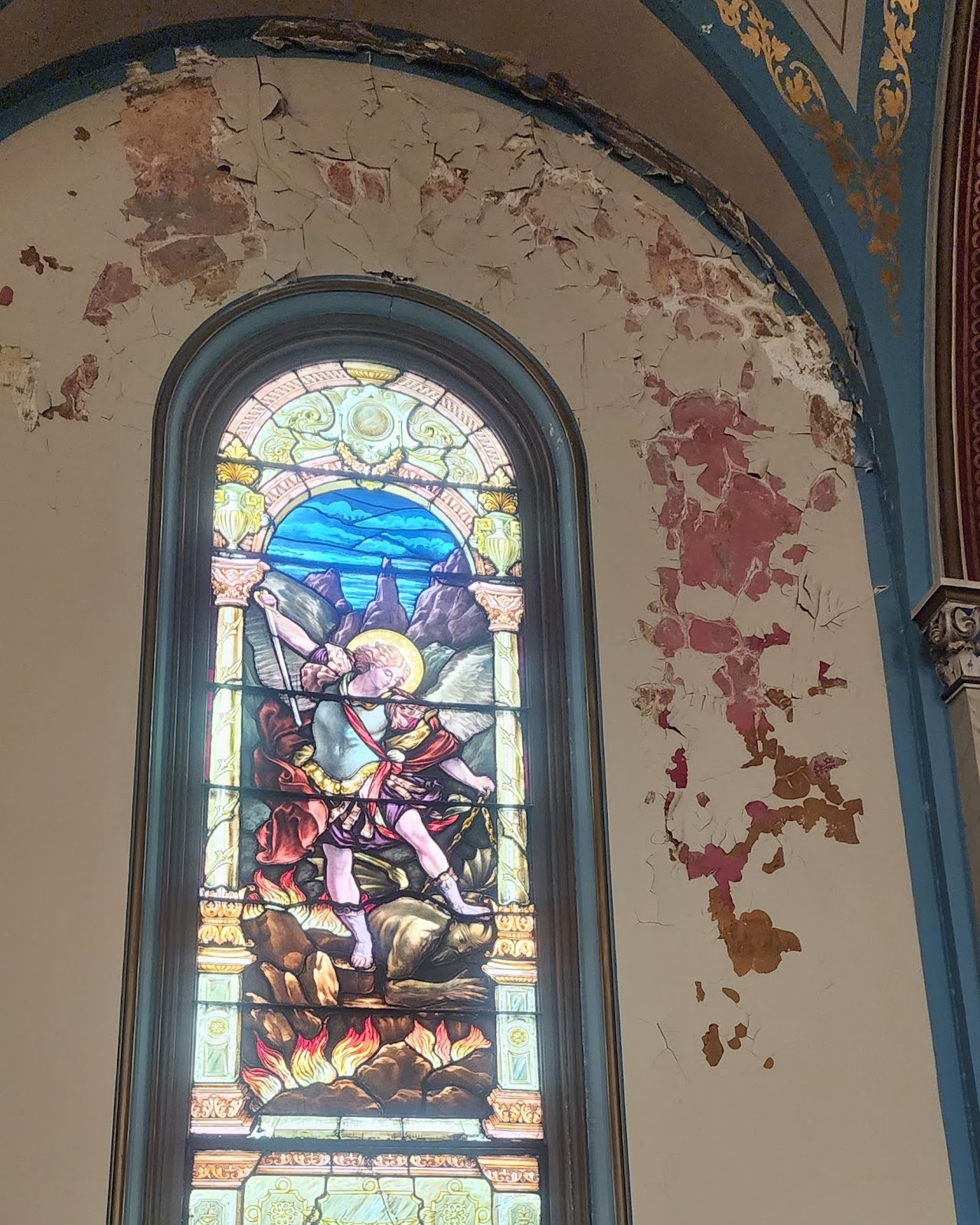
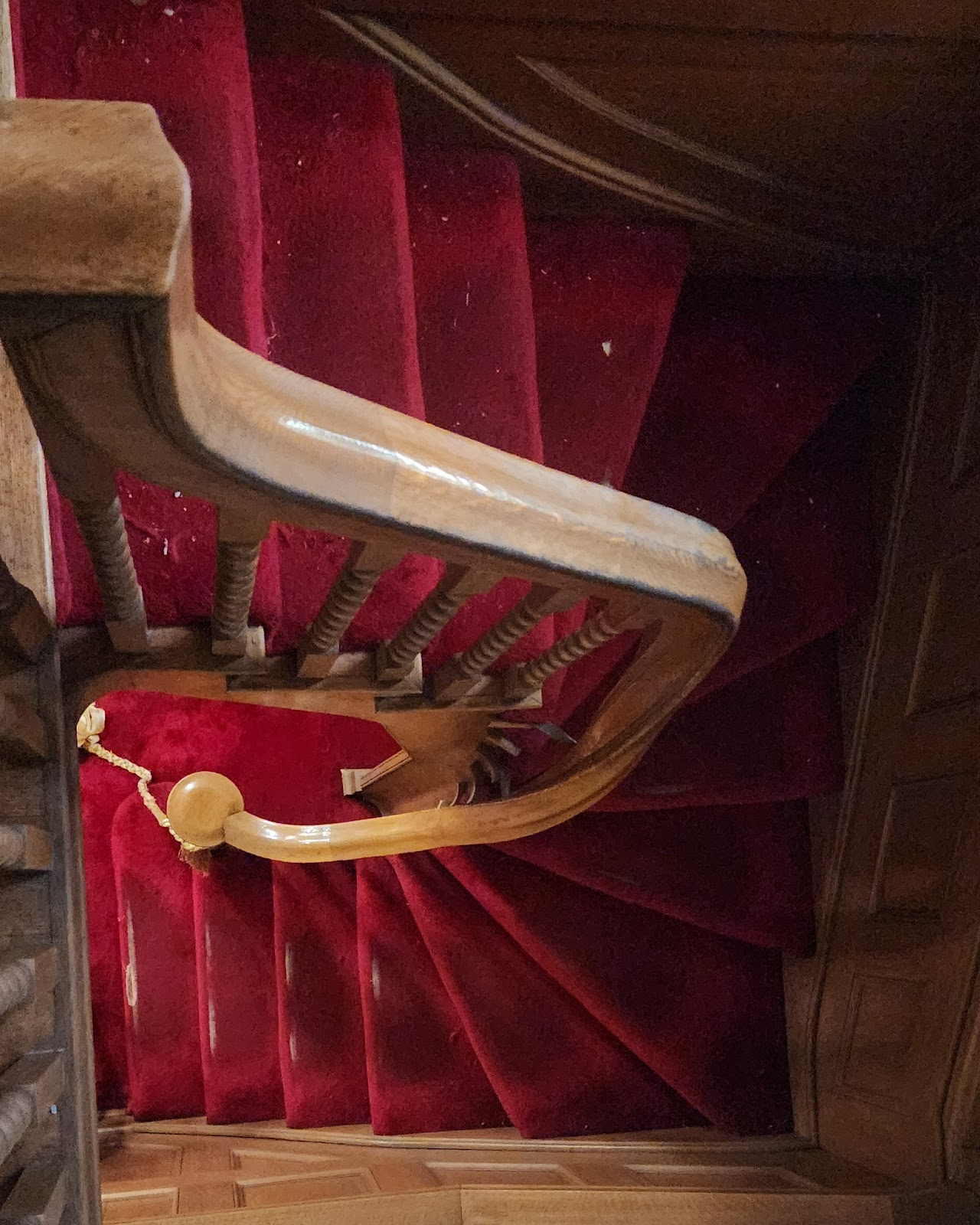
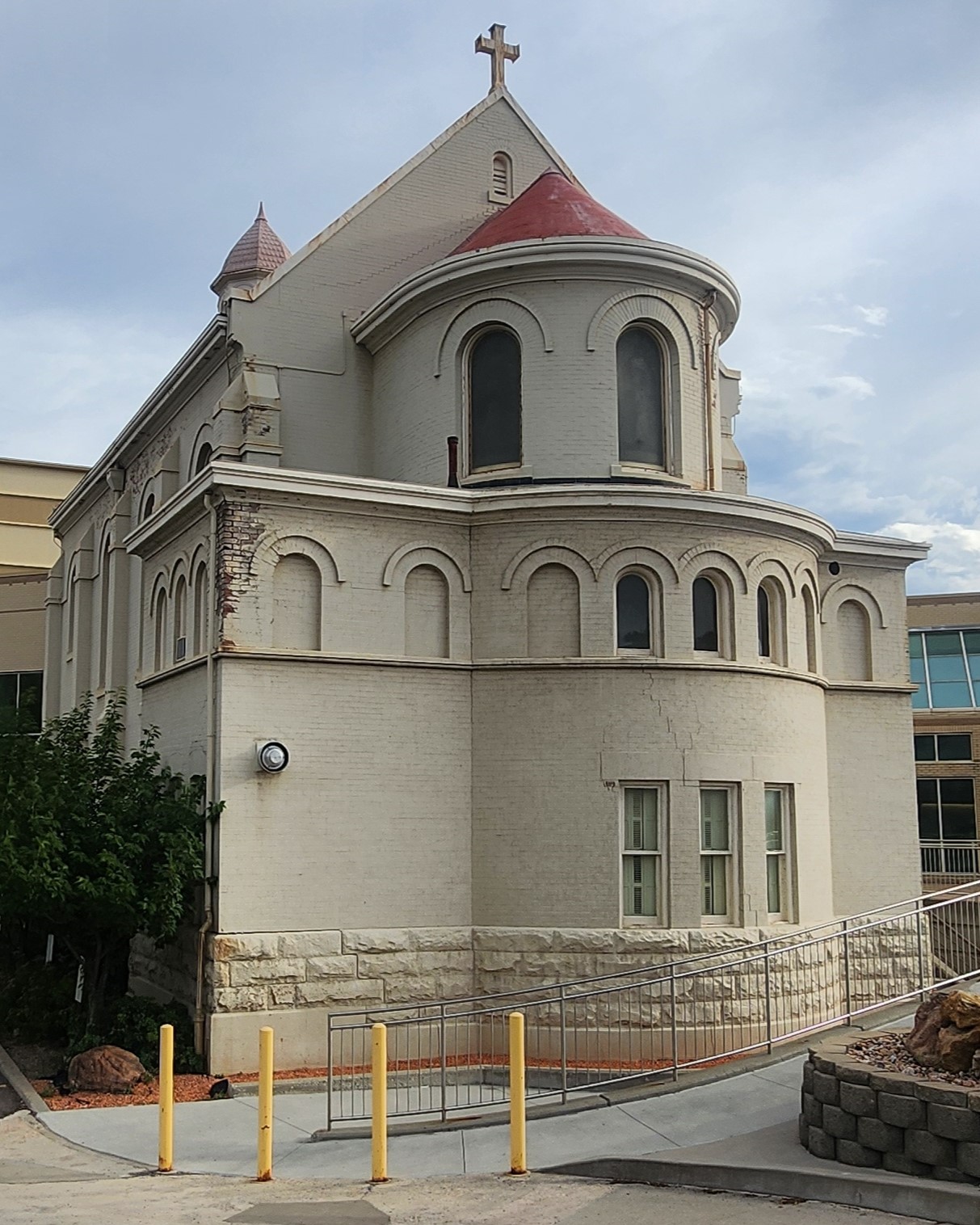
Inside the historic chapel at Holy Cross Hospital

Inside the Holy Cross Hospital Chapel, June 26 2024.

I recently toured the interior of the old Holy Cross Hospital Chapel, although now the hospital is known as CommonSpirit Holy Cross Hospital Salt Lake and is located at 1050 E S Temple SLC.

The chapel was built in 1904 and was severely damaged in the 2020 earthquake.

Thankfully the hospital has plans to repair (not demolish) the chapel and I was told that fundraising will start later this year or early next year. You can see some of the damage in these photos.

Interestingly, the windows in the chapel are not stained glass, rather they are painted. I have included a close-up image of the St. Patrick painted glass window (Image 2).

The interior painting of the chapel was done by Italian artisan, Achille Pertelli, and was completed in 1909.

The chapel was probably designed by Carl M. Nehausen, who also designed the Cathedral of the Madeleine and St Ann’s Orphanage (now a school).

Image 9 are historic photos. The top is the exterior from 1909. The lower one is the interior from 1904 at the dedication, note the lack of the Pertelli paintings. Images from USHS.

Painted window (not stained glass) depicting Saint Patrick.
Inside the Holy Cross Hospital Chapel, June 26 2024.

Inside the Holy Cross Hospital Chapel, June 26 2024.

Inside the Holy Cross Hospital Chapel, June 26 2024.

Inside the Holy Cross Hospital Chapel, June 26 2024. Note cracking damage from the 2020 earthquake.

Inside the Holy Cross Hospital Chapel, June 26 2024.

Inside the Holy Cross Hospital Chapel, June 26 2024.

Inside the Holy Cross Hospital Chapel, June 26 2024.

historic photos of the chapel. The top is the exterior from 1909. The lower one is the interior from 1904 at the dedication, note the lack of the Pertelli paintings. Images from USHS.

11 November 2022

The old Veterans Hospital at 12th Ave and E St is now the Meridien Condos

Old Veterans Hospital in 2022, as Condos
Veterans Hospital ca 1930s. Image from UDSH

This is the old Veterans Hospital at 401 E 12th Avenue (roughly 12th Ave and E Street) in Salt Lake City is now the Meridien Condos at Capitol Park.

Built-in 1932 in a neoclassical style, this 5 ½ story brick building was originally set back from the street on a steep hill and surrounded by park grounds. A smaller 3-story annex was added in 1939.

The newly created Veterans Administration (VA) recognized a need for a hospital in SLC to care for WWI and Spanish-American War veterans Architectural plans were drawn up in 1930 and site selection began.

Originally it was thought that the VA hospital should be located close to Fort Douglas but the VA decided on a residential area high on the North Bench (the Avenues) which provided cooling canyon breezes and was situated above the city smog.

Postcard showing the Salt Lake City Veterans Hospital

Postcard showing the Salt Lake City Veterans Hospital

More than 3 city blocks were purchased and construction was completed in June 1932.  The first patient, WWI vet Oliver J. Hunter, was admitted on July 1, 1932. Once fully opened, the hospital provided beds for 104 patients.

Built during the Great Depression, the hospital was seen as a method to provide good jobs to hard-hit Utahns, both during and after construction. Later the Works Progress Administration (WPA) provided labor tending to the grounds surrounding the hospital.

The hospital boasted state-of-the-art facilities including dentist care, an x-ray department, surgery, dining rooms, and a dietary kitchen. During WWII, the focus of the Veterans Hospital became vocational rehabilitation and physical therapy.

Veterans Hospital group, Christmas Day 1942. Image from UDSH.

Returning Soldiers from WWII greatly outpaced the SLC Veterans Hospital and the US Army opened the much larger Bushnell Hospital in Brigham City in 1942. And in 1946 SLC was approved for a new VA facility with construction work starting in 1950 on part of the Fort Douglas Military reservation; this new VA Hospital was opened in 1952 and is the current main campus of the SLC VA hospital system at 500 Foothill Blvd.

In 1962 the old Veterans Hospital in the Avenues neighborhood was closed to patients and was soon declared surplus. In December 1964 the property was purchased by the LDS Church and used the old hospital as an annex to its Primary Children’s Hospital. The LDS Church sold it in 1987 to IHC Hospitals Inc and when the new Primary Children Hospital was built in 1990.

Most of the land (28 acres) surrounding the old Veterans Hospital was subdivided and sold to developers. The hospital and a few surrounding acres were retained and the building was used intermittently but was primarily vacant for 16 years.

Veterans Hospital as it looked in 1996, Image from NRHP file, National Archives.

Veterans Hospital as it looked in 1996, Image from NRHP file, National Archives.

Veterans Hospital as it looked in 1996, Image from NRHP file, National Archives.

Veterans Hospital as it looked in 1996, Image from NRHP file, National Archives.

Veterans Hospital as it looked in 1996, Image from NRHP file, National Archives.

Veterans Hospital as it looked in 1996, Image from NRHP file, National Archives.

In 2004 it was purchased by Pembroke Capitol Park and converted to luxury condominiums through historic adaptive reuse, done by Hogan Construction at a cost of $20M. The interior was gutted, an underground parking structure was added, and the exterior was preserved. The condo conversion was completed in 2008.

Images of the renovation, from Hogan Construction.

Images of the renovation, from Hogan Construction.

Images of the renovation, from Hogan Construction.

Images of the renovation, from Hogan Construction.

In 1988 the building was shown in the movie Halloween 4 as Smiths Grove Sanitarium.

Of Note:
It is likely that the Veterans Hospital on 12th Avenue was segregated. The Tuskegee Hospital for Sick and Injured Colored World War Veterans in Tuskegee Alabama opened in 1923 and was the only Black Veterans hospital until 1954.

During the 1920s and 1930s, the Veterans Administration allowed hospitals to choose their segregation status based on local and regional practices, which for Salt Lake City would mean Black Soldiers would be in a separate ward or not allowed at all. My guess is the latter.

President Truman desegregated the US military through Executive Order 9981 but the VA kept most hospitals segregated in some form through 1953. On July 28, 1954, the VA formally announced that segregation had been eliminated at all VA hospitals.

So far, I’ve only seen white men as patients in the 1940 Census. Write a comment if you know of any specifics on the SLC Veterans Hospital policy on segregation.

Source: History of the VA in 100 Objects: number 11.   https://www.va.gov/HISTORY/100_Objects/Index.asp

Sources:

  • Salt Lake Telegram Nov 6 1931
  • Salt Lake Tribune July 2 1932
  • Salt Lake Tribune July 8 1932
  • Salt Lake Telegram July 14 1932
  • Deseret News Sept 14 1932
  • Salt Lake Telegram Sept 9 1933
  • Salt Lake Tribune July 6 1947
  • Deseret News Oct 7 2005
  • Salt Lake Tribune Aug 10 2006
  • Veterans Hospital NRHP File, NPS
  • History of the VA in 100 Objects: number 11

07 October 2022

Places that SHOULD be haunted based on their histories

I’m not sure how ghosts work, but there are plenty of places around SLC that should be haunted based on their history. Here are a few areas that may qualify as Spooky Salt Lake City. 

1. Sugar House Park, the site of the old Utah State Prison, was the scene of several executions and the site of a prison cemetery.


2. The Palladio Apartments were literally built on a burial ground. This block, just east of Pioneer Park, was the first cemetery of the Mormon Pioneers, which was also dug into an Indigenous burial area. All the Mormon settler’s human remains were removed in the 1980s and reburied at This is the Place State Park. But funding and time did not allow the same courtesy for the Native American burials; partial human remains were recovered from 3 individuals, and more were [are?] likely present.
 
3. Salt Lake County Government Center at 2100 South and State St was the former site of the County Hospital which often provided hospice care for the poor, including the first woman convicted of murder in Utah, Mary Jane Smith.


4. Liberty Crest Apartments, formerly the site of the Scandinavian Methodist Episcopal Church at 158 S 200 East, where serial killer Reverend Francis Hermans lived and dismembered his victims.

5. Judge High School was formerly the site of Judge Miners Home, which was repurposed during the 1918 Spanish Flu pandemic as a quarantine hospital. Of course, many of the Spanish Flu patients died during their stay.


6. The Bonneville Golf Course was the former site of an 1850s quarantine station where people passing through Emigration Canyon to SLC were required to isolate if they were ill. Also, later, a site for the isolation hospital that was commonly known as the Pest House. Undoubtedly the site of many deaths, and likely lots of children.

7. The stretch of I-80 (old US Route 40) between SLC and Wendover has been the scene of some terrible tragedies, including several plane crashes, train derailments, and vehicle accidents.


8. The railroad crossing at 10200 South and 400 West was the site of the 1938 Jordan High School Bus and freight train collision in which 23 students and the bus driver died.